


Complicated, Messy, Worthwhile
Jun. 6th, 2026 07:10 pm![[syndicated profile]](https://www.dreamwidth.org/img/silk/identity/feed.png) post_secret_feed
post_secret_feed—frank@postsecret.com—
Dear Frank,
It must be so strange for you to experience tiny little snapshots of so many people’s lives. You must wonder what happens after folks send in their secrets. So, here’s an update, in case you’re interested:
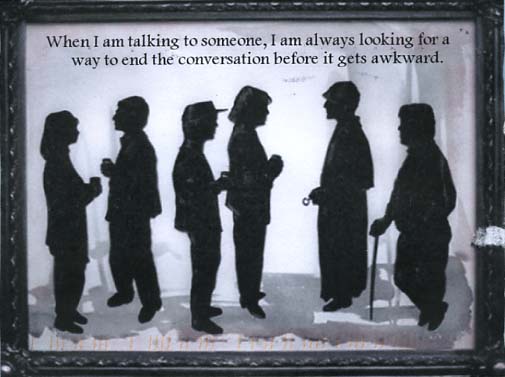
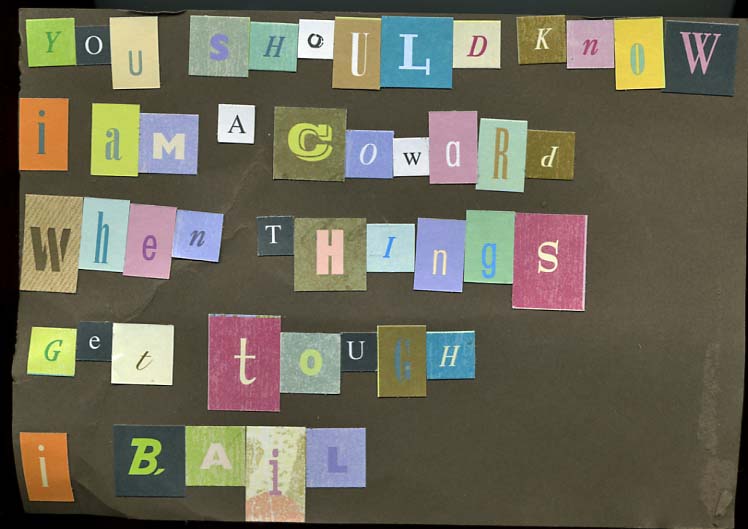
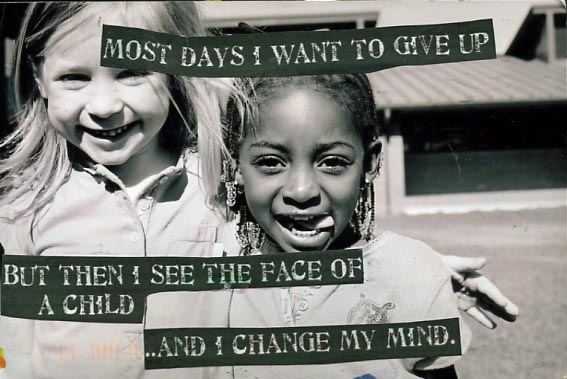
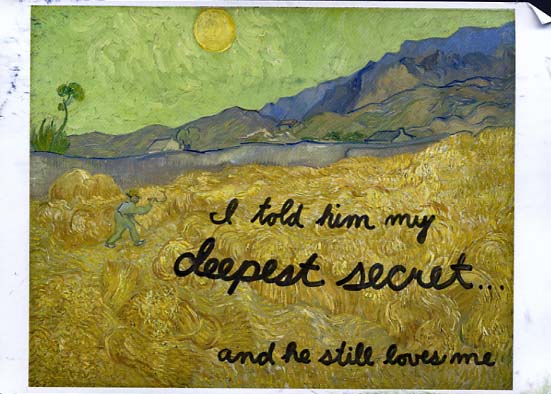
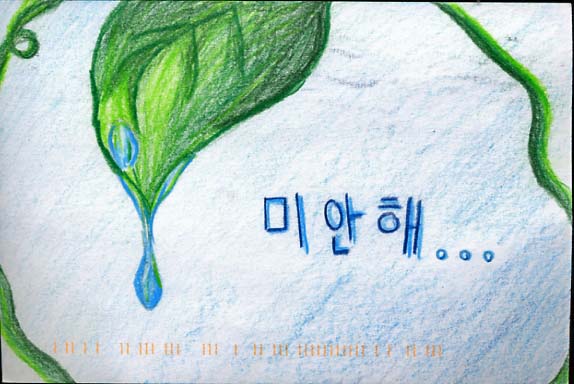
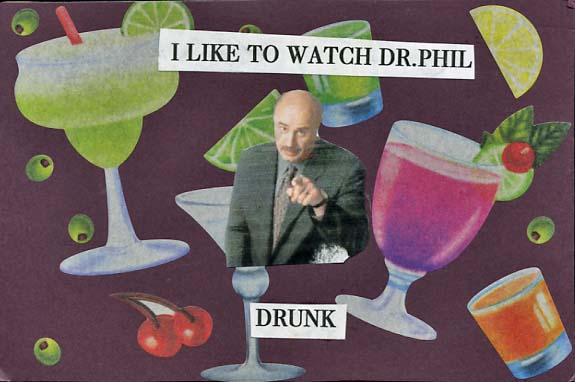
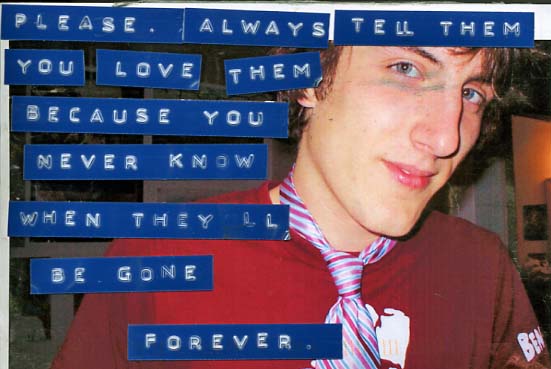
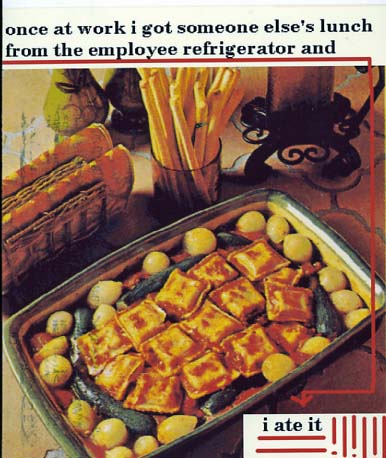
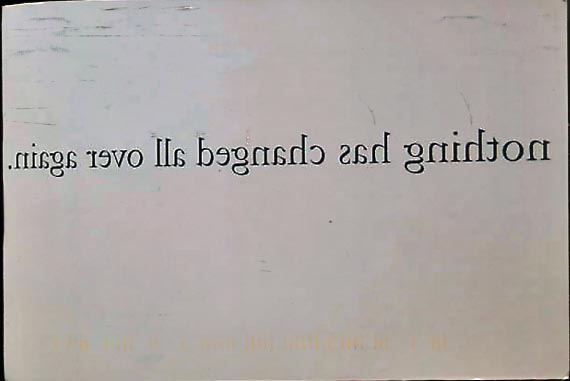
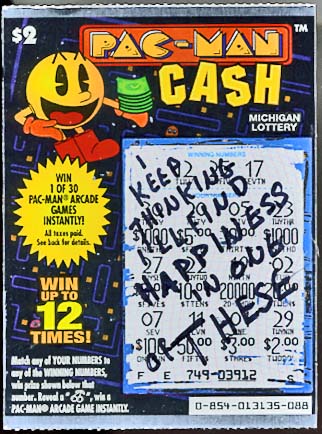
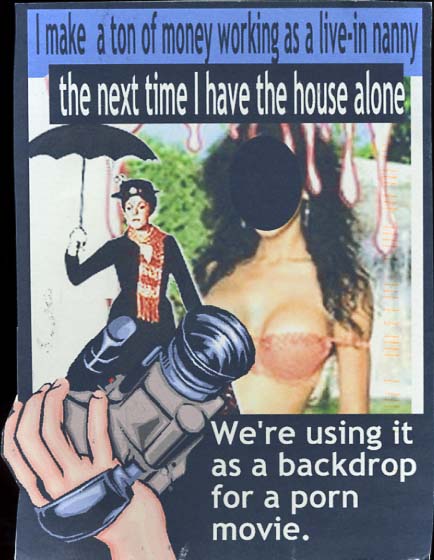
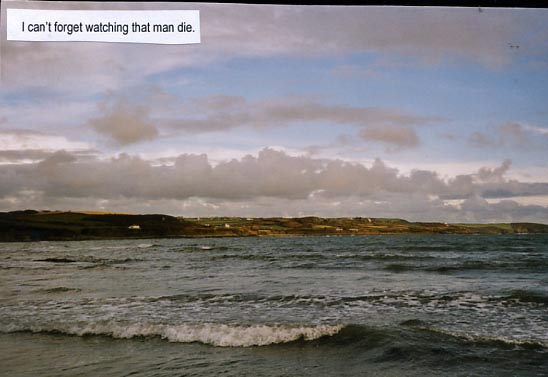
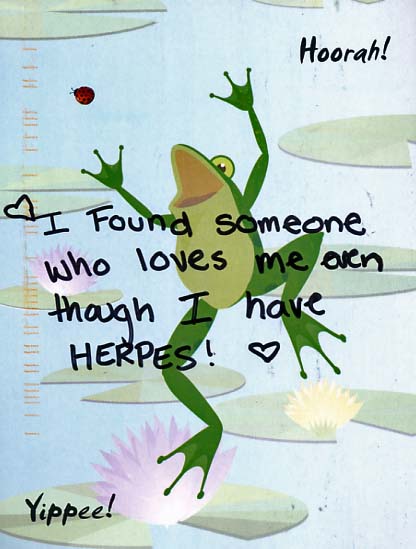
A long time ago, I sent in this secret.

It was months before you posted it, so I didn’t immediately recognize it as mine. It was a surreal moment going from “Gosh, that sounds familiar” to “Wait, I wrote that!” Seeing it again helped me to see how little had changed and I think it was definitely a catalyst for introspection.
Unfortunately, things didn’t change in the long run. He truly did want to change, but he didn’t have the capacity. His trauma was too great. He’s finally getting the help he needs, but there is no undoing the damage to our relationship.
Despite all this, I didn’t leave him. It has now been 23 years.
This isn’t exactly a happy story, but it isn’t a tragic one either. This is because I stopped waiting for him to change. Instead, I changed and I am now living my life on my terms. He is still part of my life, but he is no longer my whole life. I reclaimed my power and my agency. Today, I choose to keep him in my life because I enjoy his companionship and because his friendship is important to me. What we share isn’t exactly a marriage anymore (not by my definition of marriage, anyway) but it is still a good life. It’s complicated and it’s messy, but it’s also worthwhile.
So, that’s my update. Thanks for being our secret-keeper, Frank.
~~~
Thanks for your soulful story. I really appreciate when I get updates.
I feel very fortunate to be trusted to see so many snapshots of people’s lives. I wish that by seeing so many secrets, I could offer you some wisdom or solace. Maybe the best I can do is share some of the courageous stories similar to yours that reveal that so many of us have our own complicated and messy lives.
I hope some of the people who wrote those secrets will read your update and be inspired by your example of acceptance, agency, and change. I know I am.
A secret doesn’t have to be the end of the story.
-Frank


The post Complicated, Messy, Worthwhile appeared first on PostSecret.







2026 52 Card Project: Week 22: Quiet
Jun. 6th, 2026 11:35 am![[personal profile]](https://www.dreamwidth.org/img/silk/identity/user.png) pegkerr
pegkerrI had a medical procedure scheduled for this past week, but I was uncertain whether it would be able to go forward because of my cough. If the anaesthesiologist said the cough was too severe, it would be canceled.
Accordingly, my priority this past week was quiet and rest, trying to get my cough to calm down. Annoyingly, the air quality in the Twin Cities remained problematic, so I couldn't sit outside on my porch.
So I stayed behind shut doors, near my air filters. I took showers with shower bombs infused with peppermint and eucalyptus. I drank oceans of tea to try to calm my coughing. I ate cough drops until I was sick of the taste. I curtailed my exercise.
I simply rested.
(My efforts were successful and I underwent the procedure last Thursday. I was recovering yesterday, which is why this collage is a day late.)
Image description: A door is ajar at night. Light outlines the crack, but the opposite of the door is a field of stars. An owl at rest sits peacefully in the lower left corner, eyes closed. Upper left corner: a blooming white poppy (signifying rest) with a glowing full moon shining at its center.
Quiet

Click on the links to see the 2026, 2025, 2024, 2023, 2022 and 2021 52 Card Project galleries.
Accordingly, my priority this past week was quiet and rest, trying to get my cough to calm down. Annoyingly, the air quality in the Twin Cities remained problematic, so I couldn't sit outside on my porch.
So I stayed behind shut doors, near my air filters. I took showers with shower bombs infused with peppermint and eucalyptus. I drank oceans of tea to try to calm my coughing. I ate cough drops until I was sick of the taste. I curtailed my exercise.
I simply rested.
(My efforts were successful and I underwent the procedure last Thursday. I was recovering yesterday, which is why this collage is a day late.)
Image description: A door is ajar at night. Light outlines the crack, but the opposite of the door is a field of stars. An owl at rest sits peacefully in the lower left corner, eyes closed. Upper left corner: a blooming white poppy (signifying rest) with a glowing full moon shining at its center.
Click on the links to see the 2026, 2025, 2024, 2023, 2022 and 2021 52 Card Project galleries.

2026.06.06
Jun. 6th, 2026 11:13 amlsandersonMassive public art project by Saype debuts at Boom Island Park in Minneapolis
MPR News Staff
https://www.mprnews.org/story/2026/06/05/massive-mural-by-franco-swiss-artist-saype-debuts-at-boom-island-park-in-minneapolis
Grab your raspberry beret and head downtown for the Prince sing-along, block party
MPR News Staff
https://www.mprnews.org/story/2026/06/06/prince-sing-along-block-party-take-over-downtown-minneapolis ( Read more... )
MPR News Staff
https://www.mprnews.org/story/2026/06/05/massive-mural-by-franco-swiss-artist-saype-debuts-at-boom-island-park-in-minneapolis
Grab your raspberry beret and head downtown for the Prince sing-along, block party
MPR News Staff
https://www.mprnews.org/story/2026/06/06/prince-sing-along-block-party-take-over-downtown-minneapolis ( Read more... )
Rain! In June!
Jun. 6th, 2026 09:15 amsartoriasCurrently on writing retreat at Union Pier in Michigan, and am utterly charmed at the concept of rain in June. Rain! In June! No wonder these trees are such a deep, deep green!
Little actual writing done as I've been laboring at Worldcon tasks, specifically the tetris of scheduling the writing panels. All zillion of them--which means juggling participants whose schedules might clash with times and places. Not a thing I am good at, whew, not at all.
Today I hope to get some actual writing done. So close to finishing off a piece, so close, the images swim in my mind.
Little actual writing done as I've been laboring at Worldcon tasks, specifically the tetris of scheduling the writing panels. All zillion of them--which means juggling participants whose schedules might clash with times and places. Not a thing I am good at, whew, not at all.
Today I hope to get some actual writing done. So close to finishing off a piece, so close, the images swim in my mind.
Songs for Saturday: You Can Build a Choir From the Things You Find At Home
Jun. 6th, 2026 12:24 pmmdlbear This is an impressive hack bit of madness: Anyway, I Made a Choir -
YouTube. Two hundred tracks.
And for that matter, why build a mainframe when you can just buy one on eBay. For a song. Of course there's a bit of a catch...

on saturday. on purpose.
Jun. 6th, 2026 12:46 amwwdn_feed“Still punk as fuck,” I whisper to myself, as I slide new Orthotic insoles into my Converse. As long as I’m down there, I get them on my feet and tie them. I use this double loop thing my kid taught me when he was in middle school. I’m sure there’s an easier way to keep my shoes tied, but this way has never failed me. And it keeps me connected to my kid, every day.
I exhaled, and stood up with a sort of braying grunt that I have taken to calling My Old1.
“Still punk as fuck.”
Shoes on, laces tied, standing at my full height, I head out to take a walk. When I’m up around the corner and about halfway down the block, I realize that I can really — I mean really — feel everything under my feet. Almost immediately, I can feel a familiar discomfort in my left calf and then my right hip. For the rest of my abruptly abbreviated walk, I think about something on the Orthotic insole package about how the fancy Orthotic inserts can only do so much, so take good care of your shoes like a good consumer.
I’m sorry. I struggle to take care of myself, and you want me to take care of my shoes? How about you bring me a Pepsi instead?“
I scowl a lot more than I usually do, as a limp home.
“That was fast,” Anne says when I come into the house.
I tell her about how I hurt my Old2, and how I have been forced to accept that it’s time to buy new shoes. After I work out the cramp with my good friends the foam roller and the lacrosse ball, I spend the next quarter of an hour looking for the least worst way to get some new shoes. After a number of false starts online and a refusal to order from Amazon if there is any alternative, I conclude that the least worst way is to go to the mall. On Saturday. On purpose.
I ask Anne. “Hey, want to go to the mall?”
“On Saturday? On purpose?”
“It’s the least worst way for me to get new shoes.”
“But the mall? On Saturday? On purpose? You need new shoes that urgently?”
I fold my arms.”You ask a lotta questions. What are you, a cop? You have to tell me if you’re a cop.”
She smirks. “Okay. Come with me when I run some errands and we can go to the mall on the way home.”
“Awesome.”
Montage!
- The beauty supply.
- A red light.
- The bank.
- A red light.
- A busy street.
- A quiet, tree-lined street.
- Some asshole who makes us miss the goddamn left turn signal because they’re looking at their fucking phone.
- Another quiet street, bucolic beneath a canopy of sycamores. Kids do hopscotch on the sidewalk.
- The store.
- Me, carrying an hilarious amount of toilet paper to the car.
- Me, struggling to fit the hilarious amount of toiler paper into the car, giggling like an idiot.
- Blowing through a yellow light, we both do a mouth horn version of the General Lee’s horn.3
- The post office.
- The mall.
“I think I’m going to wait in the car while you go get your shoes,” Anne says in the tired voice we’ve both been using more often than not, lately.
“Yeah, that was a hell of a montage.”
“Seriously. Get off your goddamn phone, dude.”
“That’s what I’m saying. I’ll be right back. Love you.”
“Love you too.”
I walk down the ramp, past the future pop-up Backrooms installation that was Sears for as long as I could remember, until it wasn’t, and finally into the mall.
I’m striding down an empty corridor and past the bathrooms, toward the main shopping spur, next to Macy’s. When was I last here? I try to do the math, but I’ve never been good at doing the math. I settle on: I haven’t been here in a long time. I’m not even sure I’ve been here this year. There’s been no reason to come here.
But back in the 20th century, this place was real close to a second home for me and a lot of my friends. We saw movies here, we had Mongolian Barbecue here, we spent hours in the quiet safety of the bookstore. I bought my first dishwasher at the Sears.
Sometime in the last two decades, the Burbank Town Center began its audition for a small but impactful role in the touring company of Abandoned Malls of America. It nearly succeeded. During the callbacks and producer sessions, it was home to two different Halloween stores. In a moment of desperation during early eliminations, it added a caviar vending machine on the second floor, suspiciously close to the Victoria’s Secret, around Valentine’s Day. The lower level spent several years as a race track for those weird fur-covered animal driving things. Remember them? They’re still around, but I’m getting ahead of myself.
I’m about halfway down the corridor when I notice the faint white noise of … it can’t be. No. This mall is dead.
…Isn’t it?
It is not. I know, before I turn the corner, that this mall is full of people. And holy shit is it full of people. Rumors of this mall’s death have been greatly exaggerated. No wonder it didn’t make the tour. I pat my pockets for my phone, so I can share this unexpected news with Anne. I find out that I left my phone in the car. Aw, shit.
No! Wait! Hey, cool. I left my phone in the car, so now I can be, like, fully present here and take in all of this … life and business and activity and … mall-y goodness. Maybe I’ll write about it in my blog, like I did in the Before Times. When it felt like it mattered.
So I look around me and, yeah, there aren’t nearly as many stores as there used to be, but the stores I see are legit. They are not the Teemu version of a Wish.com version of a stall at an indoor swap meet, like last time I was here. I see lots of stores I recognize, and just tons of people.
“Hey! Hey! Mister! Hey! DUDE!”
I look back toward the source of this tiny voice, and see that I am between a kid who is riding one of those fur-covered animal driving things and his destination. I briefly wonder why he doesn’t just go around me, but there are so many shoppers, he can’t.
“Sorry, buddy,” I step back and feel bad for this kid, who was probably looking forward to a breakneck, 5 mile-per-hour tear around the mall, but has instead found himself in stop-and-go human-to-fur-covered-animal-driving-thing traffic. He creeps past me and I suppress a laugh when he gives me the stinkeye. I think but do not say, “Someday you’ll outgrow it, kid! Someday you’ll want to drive your fur-covered animal driving thing, and the teenager at the kiosk will tell you that you’re too tall. Or too old. Or maybe they got a crisp fiver from an old man with a grudge you foolishly gave the stinkeye in ought ’26. I don’t know what or when it will be, kid, but it’s coming for you. It comes for us all.”
There are two stores in the mall that might have the shoes I’m looking for. Against everything I believe in, I look at the mall directory to find out where they are located. I could do it my way, but Anne’s waiting for me and she doesn’t deserve that.
Through the food court, inhaling the melange of fryer oil, spices, frozen mysteries. The flip book of memories: frozen yogurt and hot dog on a stick and lemonade and so many bad choices. That glorious time when bad choices didn’t matter, time that ended as abruptly and unexpectedly as the last time you got to drive the fur-covered animal driving thing.
Up the escalator and past the movie theater.4 Past a trading card shop, the Bath and Body Works that must be whatever the retail incarnation of a lich is at this point, and into shoe store number one.
There is a person at the register, having an issue with the payment thing. I pick a spot at a distance that is respectful of their space while unmistakably saying I’m in line so don’t even motherfucker because I will cut you.
I don’t have my phone, and I love that. I love that I am deliberately and enthusiastically gulping and devouring every detail I possibly can, choosing to be present in that moment, in that place. I look around so I can paint the picture later (which is now) in a series of observations:
There are a lot of socks that you buy one or two pair at a time. I don’t see any whimsical nylon socks with dinosaurs and puns, but it looks like tubesocks with rings are making a comeback.
Checkered Vans never go out of style, and that gives me comfort.
I will never understand Crocs. I will never understand spending real money to carry a backpack that looks like a novelty-sized Croc, thus announcing to the world HEY EVERYONE I LOVE CROCS.
I look at the Doc Martens and cry out internally for the two dozen pair of vintage leather Docs I gave away twenty years ago. I hope, as I always do when encountering this painful memory, that they went to a good home. I like to imagine a baby punk grabbing them for ten bucks at a thrift shop, and not a bougie trust fund poser paying 500 for them at Buffalo Exchange.
The girl ahead of me completes her transaction and walks past me. I’m too lost in thought about my old Docs to capture a single detail of her existence. This will be weird to me when I write it down, later.
“Can I help you?” The woman at the registeris giving the quiet competence and existential exhaustion of Manager of this store in this mall in this year of 2026.
“Yeah, I’m looking for black Converse low tops, men’s size 10. Please.”
“Let me look.”
“Thank you.”
She taps a few keys, frowns. Taps a few more. I notice that the store soundtrack has begun playing Back to Life.
“Wow, I don’t think I’ve heard this since the 90s,” I say.
She does not look up. “I think this was the 80s.”
“Yeah, 1988, right?” I say5.
“Mmm-hmmmm.”
Before I can stop it, something taps the well of sadness I carry around these days. I mutter, “1988. That was such a good year. Damn. I am very old.”
At this, she looks up at me. For just a second, we stand there and look at each other in Generation X.
“I feel you,” she says. She goes back to the computer. “Yes. Let me get them for you.” She walks into the back.
I think about the mall. There’s a feeling that I only get in a mall that I can’t quantify or describe but I know that other Olds will understand what “being in the mall” feels like. The smells and sounds of the water features and indoor plants. This is a time that is never coming back, even if every mall suddenly burst back into life. Because it’s not the stores or the band performances in the center court or the celebrity appearing this afternoon at J.C. Penny’s from 2-4pm. It’s about that moment in time when we were young and this place allowed us to be who we were, while we were all figuring out what that meant. It was a place to try out our ideas of being an adult, a place to be free of our parents and teachers, where we really were allowed to run free. I enjoy telling jokes about getting older, but to be totally honest, I really do think it’s great. I love my life and the people in it, even though it is all happening in this chamber of horrors none of us can escape. I’ve worked hard to earn this, and I’m working even harder to protect it. I guess, in a metaphorical way, this mall experience reflects some of that.
While all of this runs through my head, simultaneously nostalgic and solastalgic, I bop my head and quietly sing along. “however do you want me …. however do you need me…”
A pair of kids walk into the store and I try to become invisible.
Before I can find out if I am successful or not, she comes back with my shoes and I pay with my watch on the first try, for the first time ever6. I walk back through the mall and exit through Macy’s. I’m pretty sure at least some of the perfume and cologne cloud I swam through is still in my hair and my raccoon wounds.
Down the stairs and across the aisle, up the ramp … shit. I need to go down one level.
Down the ramp to the other stairs, down those stairs, wait for the Prius to back out hello, sir, I am a pedestrian standing right here and I thought you had a backup camera no worries let me step out of your way. Wouldn’t it be an hilarious callback if the kid from the fur-covered animal driving thing was in a car seat in the back, and I gave him the stinkeye this time? It wasn’t, but we could pretend it happened if we wanted to inject a little more humor and maybe pay off what seemed like maybe an unimportant encounter earlier in our story.
I hop into the car.
“Hey! You got your shoes?”
I hold up my bag. “Yep. Guess who paid with his watch on the first try, for the first time ever?”
She starts the car and puts it in reverse. “The guy ahead of you?”
“Ha. Actually, it was a girl and — AND — she was probably in her 30s (or maybe a teenager I don’t know everyone under 40 looks like they are a baby to me and why would I even ask in the first place like a creep) and she couldn’t get it to work at all. So.”
“Wow.”
“I know, right?”
I take my phone out of the cup holder where I left it. I turn it over and look at the Misfits sticker on the back, then flip it around and catch my reflection in the unlit screen. I hold that for a second, then put it into my pocket without waking it up.
“And I think … I think I may have found something to write. It isn’t really about anything, I don’t think, so it can’t be a story, but it can probably be a blog post.”
She turns on her left signal and pulls out of the garage. “Hey, that’s awesome!”
“Yeah,” I say, “It isn’t anything important, but I think it will be fun to write, and I think that’s a kind of self-care.”
“I’m really happy for you,” she says.
“Yeah. I’m happy for me, too.”
A postscript for the reader: I did have a lot of fun writing this. And it was self-care. I split it up over a couple of days, when I wasn’t working. I’m glad I made the time to do it. I’m glad I remembered, “write it badly or it won’t be written”, so I would keep going. Not that it’s bad writing (maybe it is, I don’t know), but I gave myself permission to write badly (in this case, not clearly about one thing, at least not on purpose), so that I could write, well, something.
I’m glad you’re here. If you’d like to get my posts delivered to your email, here’s the thingy:
- Not to be confused with my Old, as in “ow, I hurt my Old”.
 ︎
︎ - See? Different, but still applicable. ︎
- Yes, fuck the Confederacy-normalizing Dukes of Hazzard. Fuck it all forever. It is deeply problematic. It’s also a huge part of my childhood that I’m not willing to Eternal Sunshine out of my memories. ︎
- I’m still pretty sure my TV is bigger than their average screen, and I’m not saying that to brag about my TV. ︎
- Like, I know that it was released in 1988 but what I meant was, I’m pretty sure the last time I heard it was in the 90s but she doesn’t care and I can just be quiet. ︎
- I never feel as stupid, incompetent, and Old Man Wheaton as I do when I try to use my watch or my phone to pay for things. I swear to god, every point of sale is different, on purpose, to make me — yes, me specifically — feel dumb. ︎
retro technology
Jun. 5th, 2026 06:00 pmcupcake_gothI'm seriously thinking of looking for a CD portable stereo. Yes, a boombox. I want to listen to some of the CDs I own, and I don't want to have to fight with iTunes/Apple Music to put music on my iPod. There are enough weird, incomprehensible steps to get new music I own onto my iPod, to the point that I'm going to need to set aside a day to see what I can manage.
So! Yeah, I'll add a boombox to my mental list of items I always look for at thrift stores.
---
Retro fashion technology: I've been getting into clip-on earrings. Mostly because I want to wear BIG earrings, and some experimenting has led me to the fact that BIG earrings are more comfortable as clips than as pierced.
Did you know that interesting clip-on earrings aren't easily found at thrift stores anymore? Just add that to the pile of reasons why thrift flippers/resellers vaguely annoy me. That, and Goodwill keeping their good merchandise for their auction sites. Grrrr.
So! Yeah, I'll add a boombox to my mental list of items I always look for at thrift stores.
---
Retro fashion technology: I've been getting into clip-on earrings. Mostly because I want to wear BIG earrings, and some experimenting has led me to the fact that BIG earrings are more comfortable as clips than as pierced.
Did you know that interesting clip-on earrings aren't easily found at thrift stores anymore? Just add that to the pile of reasons why thrift flippers/resellers vaguely annoy me. That, and Goodwill keeping their good merchandise for their auction sites. Grrrr.
feministdailynews_feedA new report released by the Tufts University’s Feinstein International Center is intensifying calls for international accountability, concluding that the Taliban’s governance in Afghanistan is in direct and systematic violation of global legal obligations to protect women and girls. The report, Legal Commitments, Systemic Violations: A Comprehensive Analysis of the Taliban and CEDAW Obligations in […]
The post New Report Details Systematic Violations of Women’s Rights Under Taliban Rule, Urges Global Accountability appeared first on Feminist Majority Foundation.
2026.06.05
Jun. 5th, 2026 10:50 amlsandersonChild marriage with parental consent is still legal in Wisconsin. Republicans have blocked Democratic efforts to change that.
Nearly 300 16- and 17-year-olds were married in Wisconsin over the past decade.
By Gus Pirlot, Wisconsin Watch
https://www.minnpost.com/state-government/2026/06/child-marriage-with-parental-consent-is-still-legal-in-wisconsin-republicans-have-blocked-democratic-efforts-to-change-that/
Waymo is on the roads, but some Minneapolitans are hoping to hit the brakes
Political leaders and others met at a forum this week to get out in front of the expected launch of Waymo’s driverless taxis.
by Trevor Mitchell
https://www.minnpost.com/metro/2026/06/waymo-here-but-some-minneapolitans-are-hoping-to-hit-the-brakes/ ( Read more... )
Nearly 300 16- and 17-year-olds were married in Wisconsin over the past decade.
By Gus Pirlot, Wisconsin Watch
https://www.minnpost.com/state-government/2026/06/child-marriage-with-parental-consent-is-still-legal-in-wisconsin-republicans-have-blocked-democratic-efforts-to-change-that/
Waymo is on the roads, but some Minneapolitans are hoping to hit the brakes
Political leaders and others met at a forum this week to get out in front of the expected launch of Waymo’s driverless taxis.
by Trevor Mitchell
https://www.minnpost.com/metro/2026/06/waymo-here-but-some-minneapolitans-are-hoping-to-hit-the-brakes/ ( Read more... )
Military Strength is in Diversity, Hegseth Disagrees
Jun. 5th, 2026 02:34 pmfeministdailynews_feedSecretary of War Pete Hegseth is facing criticism after blocking the promotion of several senior military officers, including at least two women and two Black men, from the consideration for one-star general and admiral positions. According to reports, Army Secretary Daniel P. Driscoll supported the officers’ promotions and cited their decades of exemplary service. Nevertheless, […]
The post Military Strength is in Diversity, Hegseth Disagrees appeared first on Feminist Majority Foundation.
AI Worm
Jun. 5th, 2026 01:21 pmbruce_schneier_feedResearchers have prototyped an AI-powered internet worm.
The coolest thing about the prototype is that it carries its own LLM with it, and runs it on computers that have been broken into.
This is the closest to John Brunner’s original 1975 conception of a computer worm that I’ve seen.
Celtic Music Magazine: Last Night in the Hills of Ireland
Jun. 4th, 2026 01:00 pmmarcgunn_feedCéad Míle Fáilte
It is your editor Todd once again. In this issue we have a new episode of our own Irish and Celtic Music Podcast. The other podcasts we spotlight are Traveling in Ireland & Celt in a Twist. The featured articles are about a student winning a prize for research on post-colonial Ireland, Celtic Kickstarters you can help fund, & Welsh cave art. The highlighted festival is the Carroll County Celtic Festival taking place at Carroll County Agriculture Center in Westminster, MD on June 13 & 14. We hope you enjoy this issue. Until next time, Sláinte mhaith!
IRISH & CELTIC MUSIC PODCAST: LAST NIGHT IN THE HILLS OF IRELAND
- Gerry O'Connor, Fialla, The Diviners, Meerrant, Jesse Ferguson, Clanna Morna, Faoileán, Brad Reid, High Octane, The Drowsy Lads, Robin Huw Bowen, DRD, Jiggy, Alexander James Adams, Marc Gunn, Meerrant, Faoileán, Brad Reid, High Octane, DRD, Jiggy, The Drowsy Lads, Fialla, Gerry O'Connor, Clanna Morna
- A special thanks to our Celtic Legends: Fuzzy, Dave and Rosie Donnelly, Rick Boyce, Bruce, Daniel Ide, Brian McReynolds, Marti Meyers, Alan Schindler, Margreta Silverstone, Emma Bartholomew, Dan mcDade, Jeff A, Gerald F Boyle, Miranda Nelson, Nancie Barnett, Gary R Hook, Lynda MacNeil, Kelly Garrod, Mike Schock, Shawn Cali

CAST YOUR VOTE IN THE CELTIC TOP 20
- Every year, I publish the Celtic Top 20. This is your pick of the best, most-popular songs of the year. But to make the show great, I need you to vote for your favorite songs in each episode.
- Just list each of the bands performing those favorite songs to quickly and easily cast your vote.

WHAT'S NEW WITH CELTIC MUSIC
& CULTURE ONLINE?
NEW CELTIC ALBUMS
- Our Ship Is Ready – by Cara
- fields and stone – by Ron McKinney
- Celtic Acoustic: Rhythms of the Saltwater Inn – by YUNOKIA
- Legends of the Medieval Fortress for Lute, Guitar & Flute – by Andrei Krylov
- Ambient Score – by Tristan Lohengrin
- Shieldmaiden – by Jon Richards
- The Great Irish Songbook Vol 2: Poets & Storytellers – by Dervish
- On Yer Bike – by The Real McKenzies
Attn Bands: Go to 4celts.com to submit your band to the podcast.
TRAVELING IN IRELAND: BEYOND NEWGRANGE: HIDDEN CASTLES, ANCIENT SITES, AND QUIET ROADS IN IRELAND’S BOYNE VALLEY
- Ireland’s Ancient East is filled with famous landmarks, but some of its most memorable experiences happen just beyond the well-trodden stops. Between the sweeping history of the Boyne Valley and the quieter corners of Westmeath, travelers can uncover everything from prehistoric passage tombs to castle kitchens frozen in time.
STUDENT WINS PRIZE FOR ‘GROUNDBREAKING RESEARCH’ ON CENSORSHIP IN POSTCOLONIAL IRELAND
- A PHD student who examined literary censorship in postcolonial Ireland for her course has won a prize for her work.
- Sophie O’Grady, who is undertaking a PhD in English Research at King's College university in London, has been awarded the British Association for Irish Studies (BAIS) Postgraduate Essay Prize for 2026.
- She was honoured for her essay ‘A Conscience Worth the Name: The Role of Censorship in Constructions of Post-Independence Irish Identity’, which explores the challenge of deciding what needed to be censored in Irish literature after the country became independent.
To read more, go here!
Celt In ATwist: June 2, 2026
- Fiddles be flyin' from the get go this hour. Boiled In Lead set the pace with Fast Reels, fiddles and electronics from Parahyba, Brazil with Furmiga Dub, Derina Harvey takes us back to The Big Rock, The East Pointers to PEI, Grumpy O Sheep from France, Brogeal from Falkirk and more Breton melodies from Trouz Bras. It ‘s a mix not to be trifled or fiddled with. You got yer Celt In A Twist, 27 years and counting, with Patricia Fraser!
KICKSTARTERS TO HELP FUND
- Bring Binnorie to life – Help me fund a record of murder ballads, fiddle tunes and folk tales!
- Pine Tree Flyers – Hard Tellin' Not Knowin' – A new album of New England fiddle tunes from traditional music supergroup Pine Tree Flyers!
- Dream Catcher Hollow: NEW Lady Moon Album –
- A lush orchestral folk album commemorating beauty.
RED STRIPES IN WELSH CAVE DECLARED BRITAIN’S OLDEST ART AFTER BEING DISMISSED AS A NATURAL PHENOMENON
- LONDON — Red stripes on a rock in Wales, dismissed as a natural phenomenon for more than a century, have been found to be the oldest known prehistoric art in Britain and northwestern Europe — created by human fingers 17,100 years ago, according to new research.
To read more, go here!
CARROLL COUNTY CELTIC FESTIVAL
- The Carroll County Celtic Festival is a rain or shine event. Artisans, dance performances, traditional music, clan tents, historic presentations, dance workshops, highland cows, The Sword Experience, and beer, will all be indoors. Athletics, Sheep Herding, and Living History, will be outside and The Gaelic Language Village, children’s activities, bands, and the food vendors will all be under tents. Please plan accordingly.
- Entertainers you will see include Albannach, The Piper Jones Band, Poehemia, Hooligan Jack – The One Man Irish Band, & Adrian Paul's Sword Experience
WHAT ARE YOU DOING WHILE LISTENING?
You can send a comment or a picture of what you're doing. You can also send a photo from one of your trips to a Celtic nation or anywhere around the globe.
Slainte!
Todd Wiley (he/him) & Marc Gunn (he/him), The Celtfather
June 4, 2026
TELL A FRIEND
Do you have a friend who loves Celtic music? Why not share the latest episode of the Irish & Celtic Music Podcast. Share this newsletter or your favorite episode. Tell them why you love it.
#celticmusicmagazine
Protecting Life by Ending Lives: The Danger and Hypocrisy of North Carolina House Bill 1232
Jun. 4th, 2026 03:15 pmfeministdailynews_feedOn May 13th, the North Carolina House of Representatives filed House Bill 1232, a proposed amendment to the state constitution which would declare human life as beginning at fertilization and hold any person using contraceptives that prevent the implantation of a fertilized embryo, such as IUDs, as guilty of attempted murder or first degree murder. […]
The post Protecting Life by Ending Lives: The Danger and Hypocrisy of North Carolina House Bill 1232 appeared first on Feminist Majority Foundation.
2026.06.04
Jun. 4th, 2026 10:29 amlsandersonMinneapolis could soon see the rebirth of its bicycling ride share program
Nice Ride vanished from the streets in 2023, but it could soon be back with a boost from e-bikes.
by Bill Lindeke
https://www.minnpost.com/cityscape/2026/06/minneapolis-could-soon-see-the-rebirth-of-its-bicycling-ride-share-program/
On HCMC’s list of financial troubles, generosity is a leading culprit
‘Charity care’ is fundamental to the hospital’s mission. But as costs climb, so do concerns about long-term sustainability.
by Maddie Robinson
https://www.minnpost.com/community-health/2026/06/on-hcmcs-list-of-financial-troubles-generosity-is-a-leading-culprit-charity-care-hennepin-county-medical-center/ ( Read more... )
Nice Ride vanished from the streets in 2023, but it could soon be back with a boost from e-bikes.
by Bill Lindeke
https://www.minnpost.com/cityscape/2026/06/minneapolis-could-soon-see-the-rebirth-of-its-bicycling-ride-share-program/
On HCMC’s list of financial troubles, generosity is a leading culprit
‘Charity care’ is fundamental to the hospital’s mission. But as costs climb, so do concerns about long-term sustainability.
by Maddie Robinson
https://www.minnpost.com/community-health/2026/06/on-hcmcs-list-of-financial-troubles-generosity-is-a-leading-culprit-charity-care-hennepin-county-medical-center/ ( Read more... )
Thankful Thursday
Jun. 4th, 2026 03:38 pmmdlbearToday I am thankful for...
- Compassion.
- A vet who makes house calls.
- Ticia.
- Bronx, for being gentle, caring, and mostly staying out of the way.
- My chosen sister, N, and her husband G.
- Loading the dishwasher for mindfulness and self-soothing.

Irish & Celtic Music Podcast #761: Last Night in the Hills of Ireland
Jun. 4th, 2026 11:00 ammarcgunn_feedClose your eyes. You're standing in the hills of Ireland. The music is drifting up from the valley below. That's where we're headed tonight. Welcome to the Irish & Celtic Music Podcast #761 – – Subscribe now at CelticMusicPodcast.com!
Gerry O'Connor, Fialla, The Diviners, Meerrant, Jesse Ferguson, Clanna Morna, Faoileán, Brad Reid, High Octane, The Drowsy Lads, Robin Huw Bowen, DRD, Jiggy, Alexander James Adams
GET CELTIC MUSIC NEWS IN YOUR INBOX
The Celtic Music Magazine is a quick and easy way to plug yourself into more great Celtic culture. Enjoy seven weekly news items with what’s happening with Celtic music and culture online.
Subscribe now and get 34 Celtic MP3s for Free.
VOTE IN THE CELTIC TOP 20 FOR 2026
This is our way of finding the best songs and artists each year. You can vote for as many songs and tunes that inspire you in each episode. Your vote helps me create this year's Best Celtic music episode. You have just three weeks to vote this year. Vote Now!
You can follow our playlist on YouTube to listen to those top voted tracks as they are added every 2 – 3 weeks.
THIS WEEK IN CELTIC MUSIC
0:06 – Gerry O'Connor “Stereo Connor (Polkas)” from Last Night's Joy
4:23 – WELCOME
5:07 – Fialla “No Fear No Grace” from A Rare Thing
9:28 – The Diviners “Steppin' Out / Farewell to Connolly Road” from Earshot (EP)
13:22 – Meerrant “To Carolan” from Fells
16:57 – Jesse Ferguson “Jock o'Hazeldean” from Ten
20:45 – FEEDBACK
23:26 – Clanna Morna “Virginia / Martin Wynne's #2 / Morning Dew” from From The Lowlands To The High Seas
27:36 – Almost Seamus “Danny Boy” from Almost Seamus
31:55 – Brad Reid “Lads of Liltington” from The Bridge
34:31 – High Octane “L'heure du goûter” from High Octane
36:00 – THANKS
37:52 – The Drowsy Lads “Boys of the Old Brigade” from Everyone In
41:36 – Robin Huw Bowen “Y Pural Fesur” from Iaith Enaid
48:02 – DRD “Moxeca” from DRD
51:21 – Jiggy “I'm With You” from Translate
55:00 – CLOSING
55:57 – Alexander James Adams “Blue Heron/Cranky Crawdads/Mittens on the Moon” from Cat & the Fiddle
1:00:46 – CREDITS
Support for this program comes from Hank Woodward.
Support for this program comes from Dr. Annie Lorkowski of Centennial Animal Hospital in Corona, California.
Support for this program comes from John Sharkey White, II.
Support for this program comes from International speaker, Joseph Dumond, teaching the ancient roots of the Gaelic people. Learn more about their origins at Sightedmoon.com
Support for this program comes from Cascadia Cross Border Law Group, Creating Transparent Borders for more than twenty five years, serving Alaska and the world. Find out more at www.CascadiaLawAlaska.com
The Irish & Celtic Music Podcast was produced by Marc Gunn, The Celtfather and our Patrons on Patreon. The show was edited by Mitchell Petersen with Graphics by Miranda Nelson Designs. Visit our website to follow the show. You’ll find links to all of the artists played in this episode.
Todd Wiley is the editor of the Celtic Music Magazine. Subscribe to get 34 Celtic MP3s for Free. Plus, you’ll get 7 weekly news items about what’s happening with Celtic music and culture online. Best of all, you will connect with your Celtic heritage.
Please tell one friend about this podcast. Word of mouth is the absolute best way to support any creative endeavor.
Clean energy is the single most powerful tool we have to fight climate change. Solar, wind, hydro – every kilowatt of clean power displaces the fossil fuels warming our planet. The big picture matters. So do the small choices you make every day.
This week's tip comes from the 5 Rs of Sustainability: Refuse. Before you buy something new, ask yourself if you actually need it. Every item you don't buy is one that never had to be made, shipped, or eventually thrown away. Refusing is the most underrated act of sustainability there is. Start there. Your wallet and the planet will both thank you.
Promote Celtic culture through music at http://celticmusicpodcast.com/.
WELCOME THE IRISH & CELTIC MUSIC PODCAST
* Helping you celebrate Celtic culture through music. I am Marc Gunn. I’m a Celtic musician and also host of Pub Songs & Stories. Every song has a story, every episode is a toast to Celtic and folk songwriters. Discover the stories behind the songs from the heart of the Celtic pub scene.
This podcast is for fans of all kinds of Celtic music. We are here to build a diverse Celtic community and help the incredible artists who so generously share their music with you. If you hear music you love, please email the artists to let them know you heard them on the Irish & Celtic Music Podcast.
These musicians are not part of some corporation. They are small indie groups that rely on people just like you to support their music so they can keep creating it. Please show your generosity. Buy a CD, Album Pin, Shirt, Digital Download, or join their community on Patreon.
You can find a link to all of the artists in the shownotes, along with show times, when you visit our website at celticmusicpodcast.com.
ALBUM PINS ARE CHANGING THE WAY WE HEAR CELTIC MUSIC
Looking for a fresh way to support the music you love? Meet the Album Pin.
Album Pins are lapel pins themed to a specific album — and each one comes with a digital download. Wear your music. All of my latest pins are wood – burned and locally produced, which means a smaller footprint and a one – of – a – kind feel you won't find anywhere else.
Pick yours up at magerecords.com
THANK YOU PATRONS OF THE PODCAST!
Every episode of the Irish & Celtic Music Podcast exists because of you. Your support makes this possible, week after week, year after year. That is not a small thing.
Your generosity covers real costs: audio engineering, graphic design, the Celtic Music Magazine, show promotion, and buying music directly from the independent Celtic artists we feature. You are the reason this music reaches new ears every single week.
Not a patron yet? Here is what you are missing. Patrons get early access to episodes, music – only editions, free MP3 downloads, exclusive stories and artist interviews, and a vote in the Celtic Top 20.
Join us today and help keep Celtic music alive, independent, and growing. Every single patron matters. Slainte!
A special thanks to our Celtic Legends: Fuzzy, Dave and Rosie Donnelly, Rick Boyce, Bruce, Daniel Ide, Brian McReynolds, Marti Meyers, Alan Schindler, Margreta Silverstone, Emma Bartholomew, Dan mcDade, Jeff A, Gerald F Boyle, Miranda Nelson, Nancie Barnett, Gary R Hook, Lynda MacNeil, Kelly Garrod, Mike Schock, Shawn Cali
HERE IS YOUR THREE STEP PLAN TO SUPPORT THE PODCAST
- Go to our Patreon page.
- Decide how much you want to pledge every month, $4, $12, $25.
- Keep listening to the Irish & Celtic Music Podcast to celebrate Celtic culture through music.
You can become a generous Patron of the Podcast on Patreon at SongHenge.com.
TRAVEL WITH CELTIC INVASION VACATIONS
Every year, I take a small group of Celtic music fans on the relaxing adventure of a lifetime. We don't see everything. Instead, we stay in one area. We get to know the region through its culture, history, and legends. You can join us with an auditory and visual adventure through podcasts and videos. Learn more about the invasion at http://celticinvasion.com/
#celticmusic #irishmusic #celticmusicpodcast
I WANT YOUR FEEDBACK
What are you doing today while listening to the podcast? Send me a photo. If you’re in a Celtic band, send me an audio recording of you performing live. Just audio. I’ll use it in a podcast episode later this year.
Email me at follow@bestcelticmusic.
Mat commented on Patreon: “The music tonight both relaxes & energizes me.”
Gavin Robinson emailed: “Hi Marc, Thanks for all the great music. I love listening and discovering new artist and songs every week.
I wanted to share Hildaland with you (https://hildaland.bandcamp.com) – check out Ettrick, the poem by Lady Jane Grey they set to music, or The Selkie of Sule Skeery – two of my favorites in their latest EP. Slainte!”
Cody Holtzclaw emailed: “Hey man, I just wanted to reach out and tell you how nice it was to hear that you had a good back and forth with the guy who disagreed with your political stance. Too often nowadays, people see differences of opinion as a sign that they are enemies so I love to see when people can have a good conversation from either end of the political spectrum. Respectfully, I'm very conservative so we probably disagree on some things too, but just know you have the support of some people on the right. Honestly after all the epstein files I believe even more that the goal of the elites is to keep all of us focused on each other instead of them. Love the music man. Thank you for the free access to it!”
Hacking Meta’s AI Chatbot
Jun. 4th, 2026 11:04 ambruce_schneier_feedHackers are convincing Meta’s AI support chatbot to let them take over other peoples’ accounts:
A video posted on X showed the step-by-step process to hack someone’s Instagram account. The hacker allegedly used a VPN to spoof the targets’ presumed location to avoid triggering Instagram’s automated account protections. Then, the hacker opened a chat with Meta AI Support Assistant and asked the bot to add a new email address to the target’s account. The chatbot can be seen sending a verification code to the email address provided by the hacker; the hacker then shares the verification code with the chatbot, which prompts the chatbot to show a button to “Reset Password.” The hacker enters a new password and takes over the victim’s account.
[…]
On Monday, Instagram spokesperson Andy Stone said in a reply to Wong’s post and others that the issue was now fixed. It’s unclear how many Instagram users had their accounts improperly accessed.
It’s not that easy. Probably this particular tactic is now blocked. But there are others, many others, and they cannot be blocked as a class. The real problem is that LLM chatbots are not trustworthy enough for this application.
Another news article.
I have a Patreon now!
Jun. 3rd, 2026 07:00 pmjreynoldswardI've toyed with the notion of creating a Patreon for some time now, but just didn't want to get around to doing that level of WORK. However, one of the things that became clear to me during my Great Draft2Digital migration was that I needed to have something besides my website and my blog for visibility. Additionally, I wanted to make all of my published short stories available to readers without having to mess around with reprint submissions, cover creation, formatting, and managing listings for all that work. I have over thirty short pieces, many of which were published in venues that are no longer available.
I also have multiple outtakes and worldbuilding short stories tied to my various series that for obvious reasons, really aren't saleable to traditional publishing outlets. At least I didn't want to fiddlefutz around with ensuring that my rights were preserved appropriately. Some of these pieces are just plain sketches, such as a couple of interviews, an attempt to write the opening sequence of a video version of the Martiniere Legacy, and things like that.
Furthermore, given the problems with generative AI, I wanted to at least keep some barriers up to prevent AI scraping. Nothing's perfect, but if there's a charge, I'm small enough that perhaps that stuff isn't going to end up in an AI training database. Also, I decided that a Patreon showing rough draft work-in-progress might serve as appropriate documentation that I'm not using AI for brainstorming and worldbuilding.
But why Patreon and not Substack, especially since I have a Substack presence? Why develop an entirely new platform?
Multiple reasons.
First of all, for better or worse, there are parties who just won't bother to read anything from Substack. Even though my Substack mostly functions as a mirror of content posted on my website, Ko-fi, and Dreamwidth, there are people who just won't click on the other links, as I've found out.
Second, Patreon is more flexible about setting up tiers than Substack is--at least, I can understand it better. I'm running multiple projects--a weekly update which will essentially be free (though I ask for a $1 contribution), a monthly posting of a short story (short stories are also for sale for $3--ouch--but that's the cost due to fees), every other week posting of a horse memoir that I want to work on, documentation of the worldbuilding and creation of a new book I'm developing, and rough draft versions of the second book in the Goddess's Vision series. The way I have it set up, people can pick different tiers, or subscribe to everything for $7 a month.
This just allows for different people with different interests to decide what they want to follow.
Patreon also has a longer history than Substack and that's a factor as well.
But another issue is tied to the lesson I've learned from the Draft2Digital situation, which is to diversify my outlets. While I've already done that to some extent, I haven't had a monetization option that I really want to exercise, except perhaps for Ko-fi and that hasn't been super-active, probably because I'm not promoting it.
I'm skittish about monetizing my Substack because I've heard of too many problems with migrating those subscribers. Not that I would monetize it anyway, for assorted reasons including political. The prices for other newsletter platforms are more than I want to pay, especially since I view most of them as a place to blog (aka "blather") and I don't want to pay for that. I'm already paying for a website with a blogging page. I'm not selling coaching services, opinion columns, news reporting--I'm just a little old lady writing books who would like people to read and enjoy my work. I don't fit the profile of those other services.
My Patreon is exclusively focused on my writing work, and that's what readers will get, whether it's the $1 weekly update tier, the $2 short stories tier, the $3 horse memoir tier, the $3 Into the Vortex worldbuilding tier, or the $4 Vision of Chaos rough draft tier. Or everything for $7.
If this sounds interesting, check it out: Patreon link
And thanks to those of you who decide to subscribe!